
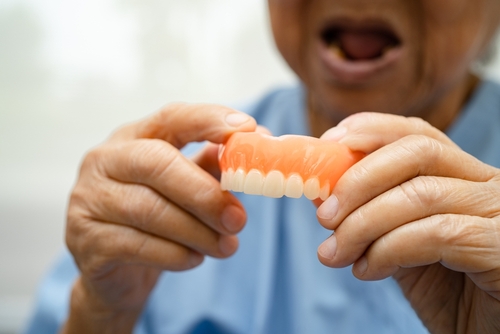
Some people see dentures as the end of a long oral health journey. Without natural teeth, it may seem like plaque, gum irritation, and daily oral hygiene no longer require the same attention. But your mouth still needs regular care. Your gums, tongue, and other oral tissues still need protection, and your dentures need consistent cleaning to stay comfortable and safe to wear. One condition we like to inform our patients about is denture stomatitis. Denture stomatitis is a common inflammatory condition that develops in the tissue beneath a denture. It is often linked to an overgrowth of Candida, a type of yeast that naturally lives in the mouth.
Even healthy denture wearers can carry Candida, so daily denture care remains important long after teeth are replaced. Fortunately, denture stomatitis is often manageable and preventable. Cleaning your dentures thoroughly, removing them at night, and visiting the dentist regularly can help protect the tissue beneath your dentures and keep your mouth healthier.
What Increases My Risk for Denture Stomatitis?
How does denture stomatitis develop in the first place? In many cases, it starts with a combination of continuous denture wear and inadequate cleaning. Dentures cover a large area of oral tissue, forming a warm, moist environment underneath. Candida, a type of yeast naturally found in the mouth, is known to thrive in these conditions, particularly when dentures are worn for long periods without giving the tissue underneath a chance to rest.
Dentures also collect bacteria, yeast, food particles, and other debris throughout the day. Without proper cleaning, these microorganisms can build up on the denture surface and remain in close contact with the tissue beneath it. Over time, that buildup can irritate the gums and palate, contributing to the inflammation associated with denture stomatitis.
A denture that no longer fits properly can add to the problem. As dentures loosen, they may shift and rub against the underlying tissue, creating areas of irritation. Smoking, diabetes, and conditions that weaken the immune system can also increase the risk of developing denture stomatitis.
How Can I Prevent Denture Stomatitis?
At Big Sky Dentrues & Implants, we find that most cases of denture stomatitis are linked to habits that can be improved with the right routine.
Daily cleaning is one of the most important places to start.
- Dentures should be cleaned with a non-abrasive denture cleanser, since regular toothpaste can be too harsh for the denture surface. After cleaning, dentures should be soaked as directed and rinsed thoroughly before they return to your mouth.
- Before reinserting your dentures, gently clean your gums, tongue, and cheeks with a soft toothbrush. Removing your dentures at night also gives the tissue beneath them time to rest from pressure and moisture.
- Regular dental visits also help prevent problems before they become harder to manage. During your appointment, we can check the fit of your denture, look for signs of irritation, and locate areas where bacteria or yeast may be collecting.
If your denture feels loose, causes sore spots, or starts to move more than usual, let us know. Small fit issues can create friction, increasing your risk of denture stomatitis.
What Are My Treatment Options?
If denture stomatitis develops, we first need to find the source of the irritation and buildup. We examine your mouth, evaluate your denture, and determine whether the issue is related to hygiene, fit, infection, or possibly a combination of factors.
Treatment often includes a more thorough cleaning routine and an antifungal medication. However, medication alone may not solve the problem if yeast and bacteria remain trapped on the denture surface.
For that reason, denture care is an important part of treatment.
We may recommend a specific cleanser, help you adjust your home routine, or professionally clean the denture when needed. If the denture no longer fits well, we may adjust or reline it, or discuss replacement options to give the tissue underneath a better chance to heal.
Give Your Dentures the Care They Need
Dentures need more than a good fit on the day you receive them. They need daily cleaning, regular checks, and attention when something starts to feel different. Sore spots, looseness, or irritation and redness beneath a denture can all point to a problem that should be evaluated.
At Big Sky Dentures & Implants, we help you protect your oral health and address concerns before they become harder to manage. If your denture feels uncomfortable or you want clearer guidance on caring for it, schedule a consultation with us today.