
How long do dentures last? With good care and regular checkups, many dentures last several years, and Cleveland Clinic puts the average lifespan of a denture at about seven to 10 years. Your gums and jawbone keep changing after tooth loss, though, so most dentures need adjustments and relines along the way, and some need replacing sooner. At Big Sky Dentures in Missoula, MT, our focus is affordable, same-day denture care. We help patients get the most life out of every denture with same-day relines, repairs, and adjustments, and we tell you honestly when replacement makes more sense than another fix.
Quick answers
- Average lifespan: About seven to 10 years for a denture with proper care, according to Cleveland Clinic.
- Relines: Expect to need a reline every so often as your gums change; Cleveland Clinic suggests every one to two years or whenever the fit changes. Our relines are usually ready the same day.
- When to evaluate for replacement: Professional guidance lists red flags such as chronic irritation, needing adhesive to eat, damage, or a denture more than 5 years old.
- Partials: A partial’s lifespan also depends on the health of the natural teeth that support it.
- Montana Medicaid: For eligible adults, DPHHS allows replacement of partial dentures every 5 years and full dentures every 10 years; verify your eligibility with our office.
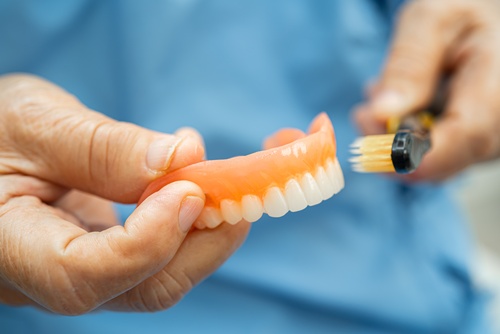
How Long Do Dentures Last on Average?
There is no expiration date stamped on a denture, but there are useful benchmarks. Cleveland Clinic states that with proper care and maintenance, the average lifespan of a denture is seven to 10 years, and it recommends a denture reline every one to two years or whenever you notice changes in fit.
That range assumes the denture is cleaned daily, stored properly, adjusted when needed, and checked regularly. A denture that is worn around the clock, dropped often, or never relined may wear out much sooner. A well-maintained denture in a stable mouth may stay comfortable longer.
Why Dentures Wear Out
- Your mouth changes. After teeth are lost, the bone and gums that support a denture gradually shrink. The denture keeps its shape, so gaps open up and the fit loosens.
- Teeth wear down. Denture teeth flatten with years of chewing, which can reduce chewing efficiency and change how your face looks.
- Materials age. Acrylic can stain, absorb odors, and develop small cracks over time.
- Accidents happen. Drops, bites on hard foods, and heat can crack or warp a denture.
How Long Do Partial Dentures Last?
Partial dentures follow similar patterns, with one important difference: they rely on your natural teeth. If a supporting tooth develops decay or gum disease, or if another tooth is lost, the partial may need to be modified or remade even if the appliance itself is in good condition. Cast metal framework partials are often durable when the supporting teeth stay healthy, while acrylic partials are commonly used as interim or easily modified options. Flexible partials can be harder to reline or modify, which can affect how long they stay in service. For details on each design, see our guides to partial dentures and flexible dentures.
Signs Your Dentures Need to Be Replaced
Age is only one factor. The American Dental Association summarizes the American College of Prosthodontists’ position that dentures should be evaluated for replacement when red flags appear, including when it has been more than 5 years since the denture was made, when adhesives are needed to eat or more than once a day, or when the denture is cracked, broken, discolored, or no longer fits well. Watch for:
- Loose or slipping dentures, especially when eating or speaking
- Sore spots, redness, or irritation that keep coming back
- Clicking sounds or changes in your speech
- Difficulty chewing foods you used to manage
- Visible wear, cracks, chips, or missing teeth on the denture
- Persistent stains or odor that cleaning does not remove
- A sunken look around your lips and cheeks
If you are going through more adhesive than you used to, our post on how to use denture adhesive and when it signals a fit problem explains why. We also cover common damage in signs you may need denture repair.
Reline, Repair, or Replace?
Not every problem requires a new denture, and fixing what you have is often the most affordable path. We think about it in three steps.
Adjust or Reline
If the denture is in good shape but the fit has changed, an adjustment or reline may restore comfort. Adjustments are included in your treatment fees, and we can usually see you the same day if something is bothering you. Learn more on our denture adjustments page. For a reline, we evaluate your gums, reline the denture in our in-house lab, and usually have it ready in about 2 to 3 hours.
Repair
A cracked base, a broken or missing tooth, or a loose partial clasp can often be repaired. Most simple repairs are finished in about an hour, and almost all repairs are completed the same day. See our page on same-day denture relines and repairs.
Replace
When the teeth are badly worn, the base has been repaired several times, or the denture no longer matches your mouth even after a reline, a new denture is usually the better investment. Our article on reline, repair, or replace decisions walks through those choices for patients traveling from Great Falls and beyond, and our guide to affordable dentures explains how to make a new denture fit your budget.
How Often Will Medicaid Pay for New Dentures?
Big Sky Dentures accepts Montana Medicaid. For eligible adult members with Standard Medicaid, Montana DPHHS states that partial dentures may be replaced every 5 years and full dentures every 10 years, and that one lost pair of dentures is covered in a person’s lifetime. Relines, repairs, and adjustments may be options between replacement windows.
Frequency limits differ from state to state and from plan to plan, and they can change. Before treatment, our team will verify your eligibility and explain what your benefits cover. Our post on whether Medicaid covers dentures explains the process in more detail. If you are not on Medicaid, we accept many insurance plans and offer financing through CareCredit, Cherry, and Proceed.
How to Make Your Dentures Last Longer
- Clean them daily. Brush with a soft denture brush and a non-abrasive cleanser, and soak them as directed. Good hygiene also helps prevent irritation such as denture stomatitis.
- Keep them moist. Store dentures in water or a soaking solution when they are out so they do not dry out or warp.
- Avoid heat and harsh cleaners. Hot water, bleach, and abrasive household cleaners can damage denture materials.
- Handle them over a towel or sink of water. A soft landing prevents many cracks.
- Give your gums a rest at night. Taking dentures out overnight helps your tissues stay healthy, as we discuss in Can I Sleep With My Denture In?
- Do not adjust them yourself. Filing, bending clasps, or gluing at home can make problems worse.
- Keep regular checkups. An annual fit check helps catch small problems while they are still easy to fix.
In this short video, Remi Berube, DD, explains whether you should sleep with your denture in and why nighttime habits can affect long-term comfort and gum health:
Frequently Asked Questions About Denture Lifespan
Can dentures last 20 years?
It is uncommon for a denture to fit and function well for that long, because your gums and bone change over time and denture teeth wear down. Even if an old denture is still intact, it may no longer support your bite and face properly. Regular evaluations help you decide when replacement makes sense.
How often should dentures be replaced?
Many dentures are replaced within about seven to 10 years, but the right timing depends on fit, wear, and your oral health. Professional guidance recommends evaluating a denture for replacement once it is more than 5 years old or whenever red flags appear.
How long do partial dentures last?
It depends on the design and the health of the natural teeth that support the partial. If a supporting tooth is lost or changes, the partial may need to be modified or replaced even if it is otherwise in good shape.
How often does Montana Medicaid replace dentures?
For eligible adult members with Standard Medicaid, Montana DPHHS lists replacement of partial dentures every 5 years and full dentures every 10 years. Coverage depends on eligibility and can change, so verify with our office.
Is it bad to keep wearing old dentures?
Wearing a denture that no longer fits can lead to sore spots, irritation, and difficulty eating, and it can affect the tissues that support your denture. If your denture feels loose or uncomfortable, have it checked.
Can a reline make old dentures last longer?
Often, yes. If the denture itself is in good condition, a reline can restore the fit and extend its useful life, and our relines are usually ready in about 2 to 3 hours. If the teeth are worn or the base is damaged, replacement may be the better choice.
Find Out How Much Life Your Dentures Have Left
Whether your dentures are a few months old or many years old, a quick evaluation can tell you whether an adjustment, reline, repair, or replacement makes the most sense, and many of those fixes can be done the same day. Call Big Sky Dentures at (406) 829-8900 or contact us online to schedule a visit in Missoula.