
Denture adhesive can make a good denture feel more secure, seal out food particles, and give you extra confidence when you eat or speak in public. Used the right way, a small amount is all you need. Used to hold a loose denture in place, though, adhesive becomes a band-aid for a fit problem. At Big Sky Dentures in Missoula, MT, we help patients use denture adhesive correctly, and when adhesive is no longer enough, we fix the underlying fit with affordable, same-day relines, repairs, and adjustments.
Quick answers
- Do you need denture adhesive? Not always. Many well-fitting dentures stay in place without it, but adhesive can add stability, especially with dry mouth.
- How much should you use? Small amounts. The ADA cites the recommendation of about 3 to 4 pea-sized dabs per denture.
- Too much? If adhesive oozes out around the edges into your mouth, you are probably using more than you need.
- Zinc caution: Long-term overuse of zinc-containing adhesives has been linked to nerve problems. Zinc-free products are available.
- Warning sign: Needing adhesive to eat, or reapplying it more than once a day, usually means the denture needs a reline or replacement. Many relines are done the same day.
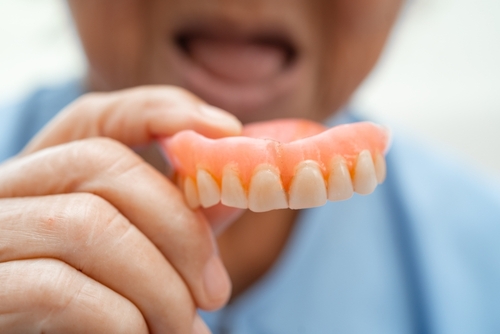
What Denture Adhesive Does (and Does Not) Do
Denture adhesives come as creams, powders, strips, and pads. They work by forming a thin layer between the denture and your gums that improves suction and grip. A thin seal also helps keep crumbs and seeds from slipping under the denture, which is a common source of sore spots.
What adhesive cannot do is change the shape of your denture or your gums. When the fit is off, adhesive only fills the gap temporarily. The U.S. Food and Drug Administration states that in most cases, properly fitted and maintained dentures should not require denture adhesives, and that when bone shrinkage makes dentures loose, they should be relined or remade.
When Adhesive Makes Sense
- Dry mouth. Saliva helps a denture seal. If medications or health conditions reduce saliva, adhesive can make up some of the difference.
- Lower dentures. A lower denture has less surface area to grip and relies more on the tongue and cheeks, so some people prefer a little extra hold.
- Extra confidence. Some patients like adhesive for public speaking, eating out, or other situations where they want peace of mind.
- Short-term help. If your fit has changed and you are waiting for a reline, a little adhesive can bridge the gap. Your denturist can tell you how to use it alongside adjustments or a tissue conditioner.
How to Use Denture Adhesive Correctly
Always follow the directions on the product you choose. In general, these steps work well for creams:
- Start with a clean, dry denture. Remove all old adhesive and dry the fitting surface.
- Apply small dabs, not long strips. The American Dental Association notes that the American College of Prosthodontists recommends using adhesive only in sufficient quantity, about 3 to 4 pea-sized dollops on each denture.
- Keep it away from the edges. Place dabs slightly in from the borders so the adhesive does not squeeze out.
- Rinse your mouth, then seat the denture. Press it firmly into place and hold for a few seconds, then bite gently to spread the adhesive.
- Wipe away any excess. If adhesive oozes into your mouth, use less next time.
Powders tend to form a thinner layer and can be a good option if creams feel too thick. Strips and pads are cut to size and placed on a moistened denture. Whatever form you use, a little goes a long way.
How Much Is Too Much?
The FDA offers a practical benchmark: a 2.4-ounce tube used by someone with upper and lower dentures should last about seven to eight weeks. The agency suggests marking a calendar when you open a new tube and when it runs out. If you are going through tubes much faster than that, it is time to have your denture fit checked. The cost of extra adhesive adds up over time, so fixing the fit can be the more affordable choice.
Zinc in Denture Adhesive: What to Know
Some adhesives contain zinc to improve hold. Zinc is an essential mineral, but too much over time can cause problems. The FDA reports that it is aware of case reports linking nerve damage, numbness, or tingling to chronic overuse of zinc-containing denture adhesives, and that people in those reports used at least two tubes each week. The FDA has not found conclusive evidence that these problems occur when adhesive is used as directed.
To stay on the safe side:
- Use the smallest amount that gives you a secure feel.
- Check the label for zinc. Zinc-free denture adhesives are widely available.
- Consider other sources of zinc, such as supplements, and tell your physician what you use.
- Stop using the adhesive and contact your physician if you notice numbness or tingling in your hands or feet.
How to Remove Denture Adhesive
Leftover adhesive can trap bacteria and irritate your gums, so remove it every day.
- From the denture: Soak it in a denture cleanser or warm (not hot) water to soften the adhesive, then brush it off with a soft denture brush. Never use boiling water, which can warp the denture.
- From your gums: Rinse with warm water, then gently wipe your gums and palate with a soft, damp washcloth or a soft toothbrush. Massaging the tissue also helps circulation.
Daily cleaning also helps prevent irritation such as denture stomatitis. It is also a good idea to take your denture out overnight so your gums can rest, as we explain in Can I Sleep With My Denture In?
Denture Adhesive vs. Denture Glue for Repairs
People sometimes search for denture glue when they mean two very different things. Denture adhesive is designed to hold a denture against your gums. Repair glue is meant to bond broken pieces. Household glues and super glues are not designed for use in the mouth, and a home repair that sets even slightly out of position can change your bite and the way the denture fits.
If your denture cracks, loses a tooth, or a partial clasp breaks, bring it in instead. As Remi Berube, DD, explains in the video below, most of our relines and repairs are completed the same day, with many simple repairs done in about an hour:
Learn more about where to go for same-day denture repair in Missoula.
Signs You Need More Than Adhesive
The American Dental Association summarizes the American College of Prosthodontists’ list of red flags for denture replacement. One of them is when adhesives are required to eat, or must be used more than once daily. Other signs your denture needs attention include:
- Your denture lifts or slides when you chew or talk, even with adhesive
- You have recurring sore spots or redness under the denture
- Food constantly gets trapped under the base
- Your bite feels different, or your face looks more collapsed than it used to
- The denture is cracked, worn, or more than several years old
We cover these warning signs in more depth in 4 Signs Your Loose Dentures Need More Than Adhesive and in our guide to how long dentures last.
Better Long-Term Fixes for a Loose Denture
Same-Day Adjustments
Sometimes a loose or rubbing denture only needs a small adjustment. Adjustments are included in your treatment fees, and we can usually see you the same day if something is bothering you. See our denture adjustments page.
Relines and Tissue Conditioners
A reline reshapes the inside of your denture to match your gums as they are now. We offer hard relines, soft relines, permanent soft liners, and tissue conditioners, and our in-house lab usually has a reline ready in about 2 to 3 hours. Read more about same-day denture relines and repairs.
A New Denture
If the denture is worn, cracked, or no longer matches your mouth, a reline may not be enough. A new denture made to your current anatomy can restore the fit and your bite. We accept Montana Medicaid and many insurance plans and offer financing through CareCredit, Cherry, and Proceed. Our guide to affordable dentures in Missoula explains how to make a new denture fit your budget.
Frequently Asked Questions About Denture Adhesive
Is it bad to use denture adhesive every day?
Daily use of a small amount is generally fine when you follow the product directions. The concern is overuse, especially of zinc-containing products, and using adhesive to compensate for a denture that no longer fits.
How long does denture adhesive last once applied?
It depends on the product, your saliva, and what you eat. Many people apply it once in the morning. If you need to reapply it several times a day to keep the denture in, the fit should be checked.
What can I use instead of denture adhesive?
The best alternative is a better fit. An adjustment, a reline, or a new denture can reduce or eliminate the need for adhesive, and many adjustments and relines can be done the same day. For dry mouth, ask about ways to manage saliva as well.
Can I use denture adhesive with a partial denture?
Some people do, but a well-fitting partial is held mainly by its clasps and your natural teeth. If your partial feels loose, the clasps may need adjusting or the partial may need a reline. Learn more in our guide to partial dentures in Missoula.
Is zinc-free denture adhesive better?
Zinc-free adhesives remove the concern about excess zinc from overuse. Whatever type you choose, use only the recommended amount.
Can I glue a broken denture back together at home?
We do not recommend it. Household glues are not designed for the mouth, and even a small misalignment can affect your bite. Many denture repairs can be completed in our office the same day.
Get a Better Fit in Missoula
If you are reaching for more adhesive than you used to, your denture is telling you something. Our team can evaluate the fit and recommend an adjustment, a same-day reline or repair, or a new denture, with clear pricing before any work begins. Call Big Sky Dentures at (406) 829-8900 or schedule a visit online.