
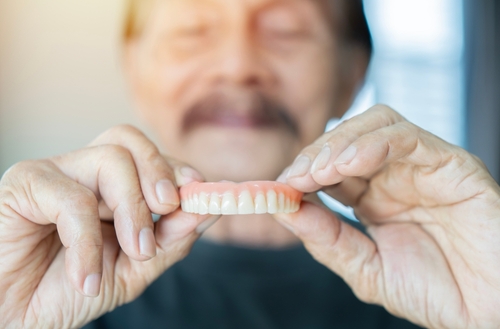
At some point in your denture journey, the question may come up plainly: How long are dentures supposed to hurt? New dentures can bring a period of adjustment as your mouth learns how to speak, chew, and rest with a new set of teeth. Some tenderness can be part of that process, especially in the beginning. Even so, discomfort should not become something you simply accept day after day. Learning the difference between normal adjustment and a denture that needs attention can help you feel more in control of the process.
At Big Sky Dentures & Implants, we can help you understand what your discomfort is telling you. By looking at how your denture fits, how your bite comes together, and where the irritation occurs, we can determine if a simple adjustment, a reline, a replacement, or another tooth replacement option may help you feel better day to day.
How Long Do Dentures Hurt at First?
Dentures can hurt at first, but they should usually cause temporary soreness rather than constant pain. A new denture changes how your mouth rests, speaks, and chews, so your gums, tongue, and facial muscles often need time to adjust. During the first few weeks, mild gum tenderness, small pressure spots, extra saliva, and some awkwardness with chewing or speaking can be part of the process.
However, normal discomfort should not mean forcing yourself through pain. Mild soreness may happen as your mouth adapts, but sharp, repeated, or worsening pain usually means your denture needs attention.
Many people notice that discomfort improves within a few weeks. Same-day dentures or dentures placed after extractions may cause more short-term soreness because the gums are healing while you adjust to the denture. As the tissue changes, the fit may change as well, making follow-up visits especially important.
When Denture Discomfort Needs Attention
Denture discomfort can become confusing when the soreness does not clearly connect to a new denture. You may have worn the same denture for months or years and suddenly notice rubbing, pressure, or irritation that was not there before. In other cases, a new denture may feel uncomfortable in a way that seems sharper or more persistent than normal adjustment soreness. Either way, ongoing pain deserves attention.
A simple rule can help: mild soreness is common, but ongoing pain is not. If your denture causes stabbing pain, repeated sore spots, bleeding, or discomfort that does not improve, you should not treat it as something you simply have to tolerate. Pain can signal that the denture no longer fits your mouth the way it should, or that the tissue underneath has become irritated from repeated pressure.
Denture fit can change for several reasons. A denture may feel too loose, too tight, or create a pressure spot that rubs the gums in the same place each day. An uneven bite can place too much force on one area when you chew, which may lead to soreness that keeps coming back. Your mouth can also change shape after extractions, and gradual bone or gum changes over time can cause a denture that once felt comfortable to start causing pain later.
Do Implant Dentures Hurt Less Than Traditional Dentures?
Implant dentures can change the comfort conversation, especially for patients who struggle with rubbing, slipping, or repeated pressure from traditional removable dentures.
Implant dentures connect to dental implants. Dental implants are small titanium posts that we place into the jawbone. As the area heals, the surrounding bone bonds to the implant, forming a firm connection. Once the implants are ready to support a denture, they help hold it in a more stable position.
That added stability can make a noticeable difference in daily comfort. Since the denture attaches to implants, it does not depend only on the gums for support. Patients may still experience soreness during the healing period after implant placement, but once the mouth has healed, implant dentures are often less likely to rub, shift, or create the same type of pressure spots as traditional removable dentures.
Implant dentures may be worth discussing if discomfort keeps coming back, your current denture feels unstable, or adjustments no longer provide lasting relief. We can evaluate your gums, jawbone, bite, and current denture fit to determine if implant dentures may offer a more stable and comfortable solution.
Learn What Your Dentures May Be Telling You
Dentures can take time to settle, but persistent discomfort deserves a closer look. At Big Sky Dentures & Implants, we can examine how your denture fits, identify pressure spots, evaluate your bite, and look for changes in your gums or jawbone that may be affecting your comfort. Your smile should not leave you bracing for pain every day.
Schedule a visit with Big Sky Dentures & Implants to learn why your dentures hurt and explore your options.