
Sleep involves more activity than most people realize. Some people snore. Others talk, shift positions, or even walk—all without remembering a thing the next morning. These behaviors happen outside of conscious awareness. Among them is another common but often overlooked pattern: grinding or clenching the teeth during sleep. Bruxism occurs involuntarily. You may not realize it’s happening until you notice the after-effects. Jaw soreness. Tight facial muscles. A dull headache near the temples. Teeth that feel sensitive for no clear reason. Because the grinding occurs while you are asleep, the source of that discomfort can be confusing. Many patients are surprised to learn that their morning symptoms connect directly to repeated clenching overnight.
At Big Sky Dentures & Implants, we help reduce the impact of bruxism with thorough evaluation and custom nightguards. We can address the strain, protect your enamel, and reduce the risk of long-term wear or joint discomfort.
Understanding Bruxism
Bruxism refers to repetitive jaw activity that leads you to grind, clench, or press your teeth together. Many people associate it with sleep, but it can also happen during the day. In both cases, the muscles responsible for chewing contract more than they should, often without you realizing it. That extra force places stress on teeth, dental restorations, and the jaw joints.
Daytime bruxism often occurs during periods of concentration or tension. You might clench while answering emails, driving, or working through a stressful moment. Because the behavior can be subtle, people often notice the after-effects first: jaw fatigue, facial tightness, or a dull headache near the temples.
Nighttime bruxism, on the other hand, occurs during sleep and tends to be more rhythmic and forceful. Bed partners may hear grinding sounds, and the person affected may wake with sore jaw muscles or sensitive teeth.
Signs and Symptoms of Bruxism
Over time, bruxism can leave physical signs. Teeth may look flattened, small chips can develop, and enamel may gradually wear down. Some individuals report temperature sensitivity or tenderness when chewing. Others experience discomfort around the temporomandibular joints (TMJ), where the jaw connects to the skull. Sleep quality may also decline if grinding episodes interrupt normal sleep patterns.
Bruxism develops for a variety of reasons, and it rarely stems from a single cause.
- Muscle tension: Emotional tension, concentration, or anxiety can increase jaw muscle activity, leading to clenching or grinding.
- Lifestyle influences: Caffeine, alcohol, and nicotine can intensify episodes in susceptible individuals by stimulating the nervous system or altering sleep patterns.
- Medication: Certain drugs, including some antidepressants and stimulants, are linked with increased jaw tension or repetitive muscle activity.
- Sleep-related triggers: Nighttime grinding frequently occurs alongside sleep disturbances, particularly breathing-related conditions that cause brief arousals.
- Bite and force distribution: Tooth alignment and contact patterns may affect how pressure spreads across the teeth, which can contribute to muscle overactivity.
Custom Nightguards for Teeth Grinding and Clenching
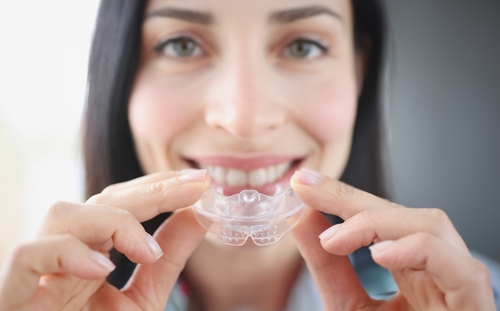
For patients who clench or grind their teeth at night, we provide custom nightguards as a protective measure. A nightguard does not cure bruxism or eliminate the underlying habit. Instead, it acts as a carefully designed buffer between your teeth, helping reduce the strain that grinding places on your enamel, jaw muscles, and temporomandibular joints. By managing the forces rather than attempting to “stop” them, a custom appliance helps limit damage and ease common symptoms.
A custom nightguard is fabricated from a digital scan of your teeth, allowing it to fit securely and comfortably. The appliance creates a smooth barrier so opposing teeth glide on durable material rather than wear directly against each other. This approach helps reduce enamel wear, chipping, and fractures, while also protecting existing dental work such as crowns, veneers, large fillings, and dental implants. Many patients also report less morning jaw soreness, fewer tension headaches, and reduced facial muscle fatigue once the excessive pressure is absorbed or redistributed.
Each appliance is tailored to the individual. We select the material, thickness, and coverage based on your grinding pattern, bite relationship, and joint health. After delivery, we can refine the fit and adjust the biting surfaces chairside to improve comfort and balance.
Find Relief From Jaw Pain and Clenching
Bruxism can place significant strain on your teeth and jaw, especially when it happens night after night without your awareness.
At Big Sky Dentures & Implants, we evaluate the signs of grinding, assess the condition of your teeth and joints, and design custom nightguards that help reduce damage and relieve pressure. If you’ve been waking with jaw soreness, headaches, or tooth sensitivity, we can help you understand what’s happening and recommend a solution tailored to you.
Schedule a consultation to learn whether a custom nightguard is right for you.