
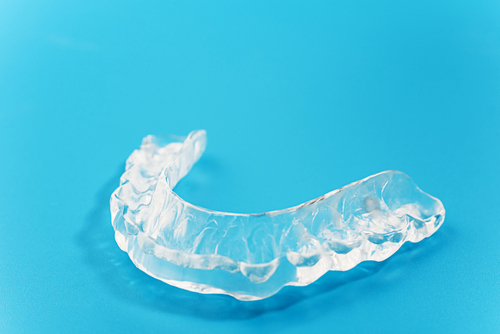
Many people have small, unconscious habits that show up only while they sleep. Talking is a common example. Some people mumble, others carry on full conversations without any awareness of it. These behaviors rarely register because the person experiencing them is not awake to notice. Unless someone points it out. Other nighttime habits are less subtle because they leave evidence behind the next morning. Clenching or grinding the teeth is one of the most common. Known as bruxism, teeth grinding occurs unconsciously during sleep and often goes unnoticed until symptoms start to appear. Many people wake up with jaw soreness, tension in the temples, or facial discomfort. Over time, the teeth may become sensitive, flattened, chipped, or even loose as repeated pressure wears them down. Custom mouthguards provide a protective barrier between the upper and lower teeth. They absorb excess force and reduce strain on the jaw.
A mouthguard works consistently while you sleep, creating a buffer that protects your teeth and gives your jaw a break from constant pressure. Over time, that small intervention can mean fewer morning aches, healthier teeth, and a sense that your mouth finally has room to rest.
When To Consider Custom Mouthguards
Teeth grinding, clinically referred to as bruxism, often develops without obvious warning. Many people clench or grind their teeth during sleep, when jaw muscles generate stronger forces and the body has no way to self-correct. Because this activity happens unconsciously, you may not realize it is occurring unless a partner hears grinding sounds at night or symptoms begin to surface during the day. Sleep-related grinding tends to cause more damage over time because the pressure repeats night after night without relief.
Morning discomfort is one of the clearest signs that bruxism may be affecting you. Jaw soreness, facial tightness, or headaches that seem to start overnight often point back to excessive clenching. Teeth may also become more sensitive to temperature or pressure as enamel wears down. Over time, you may notice flattened biting surfaces, small chips, or hairline cracks. In more advanced cases, strain from grinding can affect the jaw joints, leading to clicking, stiffness, or discomfort when chewing or speaking.
Several factors can contribute to bruxism, including stress, anxiety, bite alignment issues, or uneven tooth contact. In many cases, no single cause stands out. What matters most is recognizing the pattern early. When grinding continues unchecked, damage tends to progress gradually, affecting both teeth and the jaw.
Custom Mouthguards vs. Store-Bought Options
Custom nightguards start with precise impressions of your teeth, which allows us to create a guard that fits your bite exactly. That tailored fit helps the guard stay in place through the night and feel comfortable while you sleep. It matches the contours and alignment of your teeth, and the guard distributes pressure evenly across the entire bite. Instead of a few teeth absorbing most of the force, the load spreads out, helping protect enamel, reducing the risk of chips or fractures, and easing strain on the jaw muscles and joints.
Store-bought nightguards work very differently. They rely on a generic shape that rarely captures the details of your bite. That loose fit can lead to shifting, pressure points, or areas where teeth remain partially unprotected. When contact becomes uneven, certain teeth take on more force than others, which can speed up enamel wear and contribute to jaw discomfort. For people who grind heavily, those limitations often make store-bought options less effective over time.
Supporting Your Jaw During the Day
When bruxism carries over into your waking hours, small, consistent adjustments can make a meaningful difference. We watch for early signs of clenching during routine dental visits, which allows us to identify wear patterns and jaw strain before they escalate. Outside the office, paying attention to stress levels matters. Activities that encourage relaxation can help reduce the muscle tension that often triggers clenching. You can also support your jaw by limiting stimulants such as caffeine and alcohol, which tend to increase muscle activity.
If you notice yourself clenching during the day, gentle awareness helps break the habit. We often suggest checking in with your jaw position throughout the day and allowing your teeth to rest apart whenever possible. Simple reminders, such as notes on your desk or alerts on your phone, can prompt you to reset your bite and release tension before it builds.
It’s Time To Talk About Teeth Grinding
If any of these signs sound familiar, a conversation is a good place to start. We can evaluate your bite, look for early signs of wear, and talk through whether a custom mouthguard makes sense for you. Addressing teeth grinding early gives you the opportunity to protect your teeth and relieve strain before damage builds. If you are noticing morning soreness or changes in your teeth, schedule a consultation with us today.